Trump Is Right About Something.

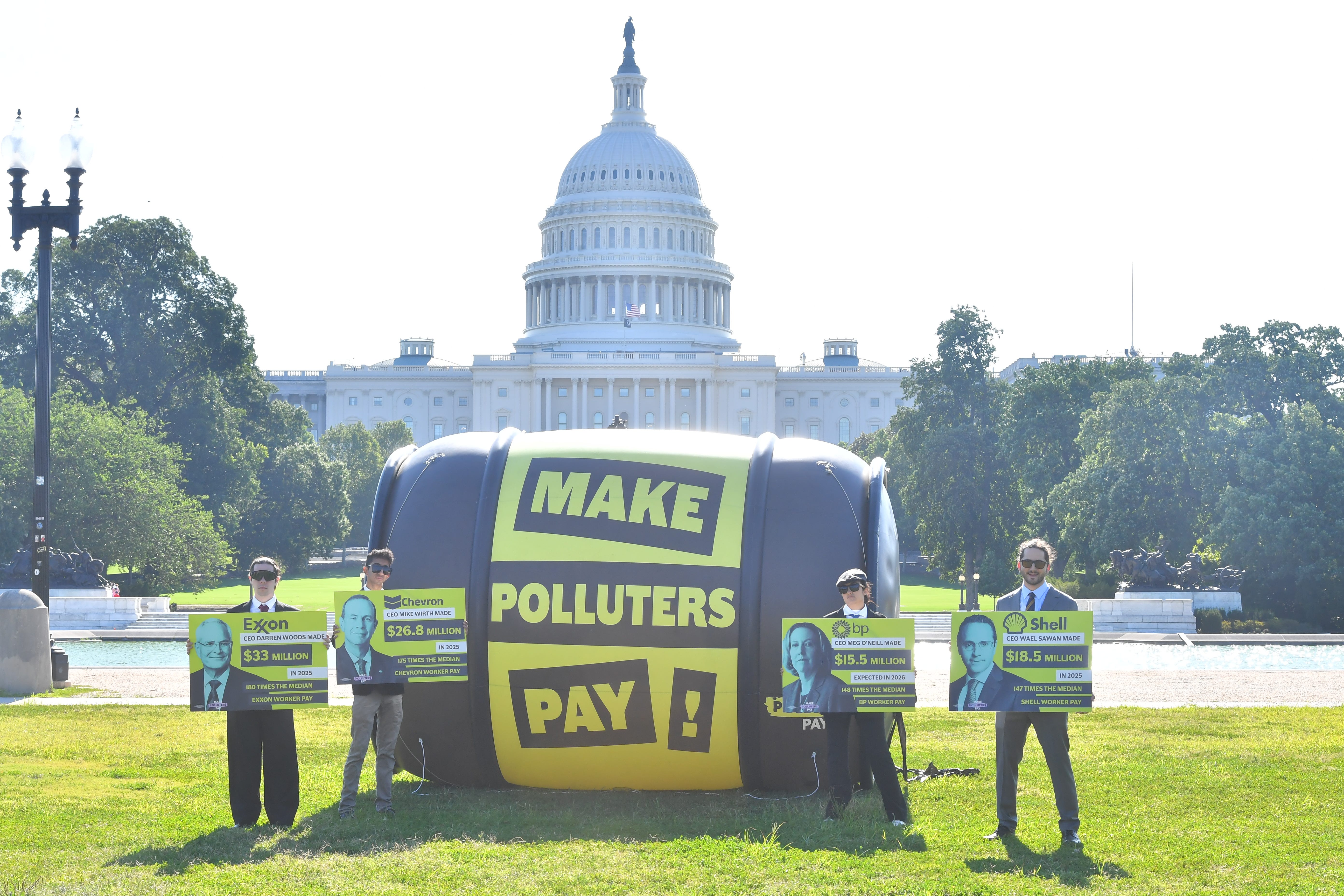
This week, Donald Trump looked at ExxonMobil and Chevron’s latest earnings and did something pretty much nobody expected him to. He criticized the industry that spent tens of millions to get him reelected. “They’re making too much money,” he told reporters at the White House on Monday evening, after his own war on Iran helped send oil prices spiking. “I don’t like it.” He said the companies should “give some of that back to the public.”
We don’t say this often, but he’s kind of on to something.
Where Trump stopped short was on the obvious next question. If oil companies are making too much money from a global crisis, how exactly do you make them give some of it back?
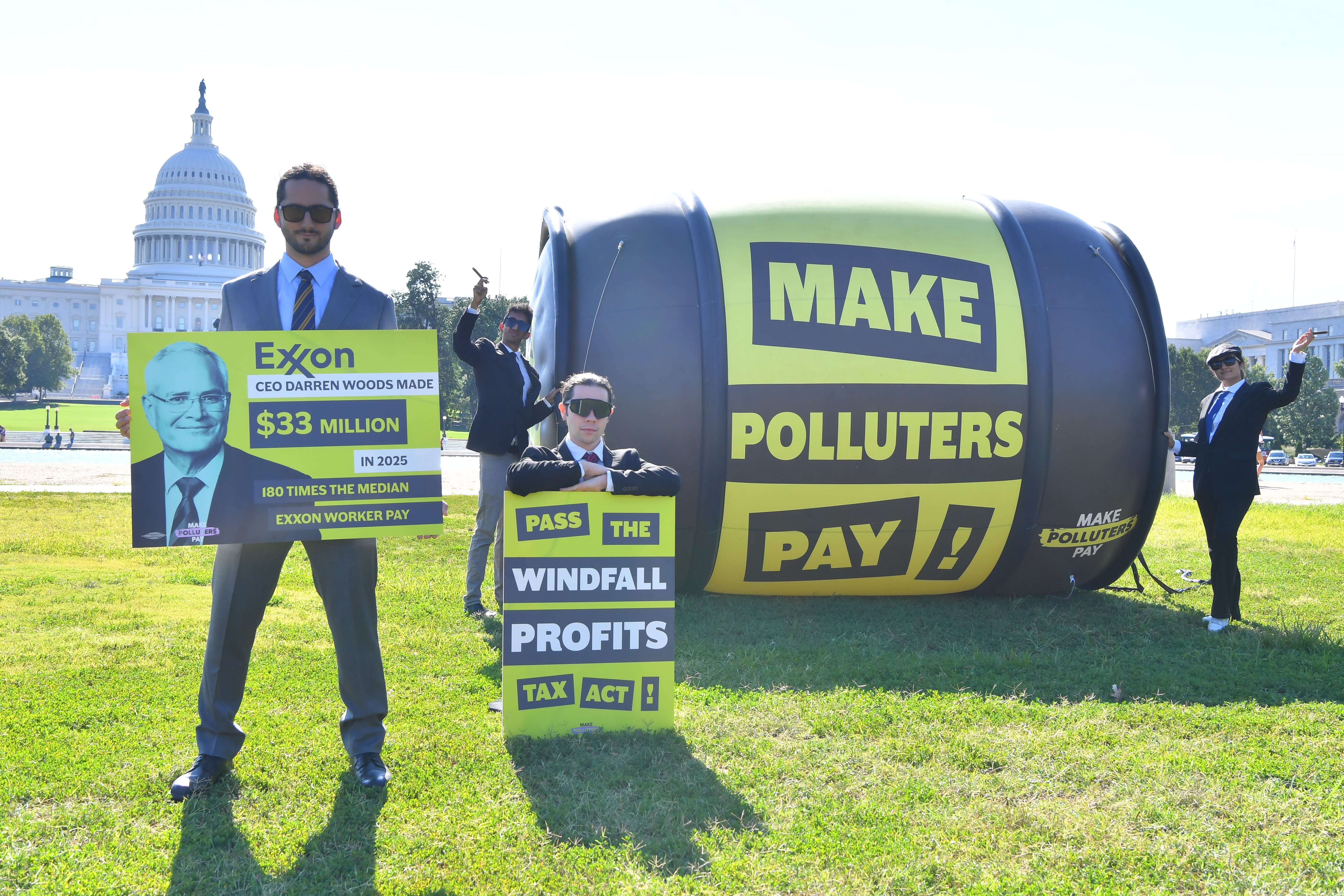
Well, good thing Congress already has an answer. In March, Senator Sheldon Whitehouse and Congressman Ro Khanna reintroduced the Big Oil Windfall Profits Tax Act to curb oil profiteering and give Americans relief at the pump. The bill would tax a portion of the extraordinary profits the largest oil companies make during periods of unusually high oil prices and return that money to Americans. Four out of five Americans support a windfall profits tax, and at a time when Washington struggles to agree on almost anything, that’s about as close to consensus as you get.
So let’s talk about the money that belongs back in American households who’ve already shelled out more than $76 billion in extra fuel costs since the war began, money that’s now sitting in oil CEOs’ pockets instead.
Exxon’s Q2 profits came in at $14.5 billion, more than double the $7.1 billion it made the same quarter last year. Chevron posted its highest quarterly profit ever, $12.2 billion, a fivefold jump. BP’s profits doubled to $5.7 billion. Shell’s more than doubled too, to $9.84 billion. Each company did better than analysts expected and none of these companies did anything innovative to earn it. No new oil fields, no new inventions, no new nothing. They pumped the same barrels into a market a war made more expensive, and the money landed in their laps. That’s precisely why windfall profits taxes exist. They recognize that extraordinary events can produce extraordinary corporate gains, and that the public doesn’t have to accept those gains as untouchable.
Ask them about their exorbitant profits and the story is always the same. BP’s CEO Meg O’Neill said she understood the pressure on households, but “we produce a global commodity, and the product we sell hangs off that global commodity price.” A spokesperson for the American Petroleum Institute said higher prices are “driven by global supply, demand and continued uncertainty around the Strait of Hormuz and other critical shipping lanes — not by any one company.” In other words, don’t blame us, blame the market.
But watch what happens when the tables are turned. After Senator Ted Cruz and Representative Harriet Hageman introduced legislation to shield energy producers from climate lawsuits and climate superfund laws, the American Petroleum Institute’s CEO Mike Sommers and the American Fuel & Petrochemical Manufacturers’ CEO Chet Thompson thanked them for stopping efforts that “risk raising costs for consumers.” So when oil companies profit from a shortage, that’s just the market — nothing you can do about that! But when they’re asked to pay their fair share for knowingly destroying the planet, suddenly the consumer is at risk and Congress needs to intervene on their behalf. Funny how that works.

All of this is unfolding while communities across the country are living through yet another devastating fire season. Dozens of fires are burning across the Pacific Northwest right now, and Oregon has already broken its annual wildfire acreage record — 2 million acres burned just three days into August, with wildfire season nowhere near over. The fires, which started Saturday, forced roughly 65,000 people around Spokane to evacuate their homes, many with only minutes to gather what they could carry.
Nationally, 44,722 fires have scorched nearly 5.2 million acres through August 3, according to the National Interagency Fire Center. It’s the country’s most active fire season in a decade by number of blazes, and the third worst since 2016 by acreage burned.
And in the middle of all that, the Trump administration denied federal firefighting assistance grants for two major wildfires in Oregon, leaving state officials with no real explanation for the gap. Somehow we’re told there isn’t enough money to help communities respond to disasters, even as oil companies collect tens of billions of dollars from a crisis that made those same disasters more expensive to recover from.
Trump said the oil companies should give some of it back. For once, we agree with him. The difference is that we’re not asking Exxon and Chevron to do it out of the goodness of their hearts. Congress already has legislation that would make it happen. A windfall profits tax would return a share of these extraordinary gains to the people who paid for them, while climate superfund laws would finally require the industry to help cover the staggering costs of the climate disasters its products have fueled
That’s really what this debate comes down to. Right now, every major crisis seems to end the same way. With families paying more at the pump, communities paying to rebuild after floods and fires, taxpayers picking up the bill, and oil companies reporting another blockbuster quarter. If even Donald Trump can recognize that something about that arrangement is backwards, Congress should stop pretending there’s nothing it can do about it.
Join us in the fight to make polluters pay. Sign our petition calling on Congress to pass a windfall profits tax and urge your state leaders to support climate superfund legislation so the people profiting from these crises—not taxpayers—help pay the bill.