
The comment period is over.
Here’s what Trump’s offshore drilling plan actually is, and why the backlash is so broad.

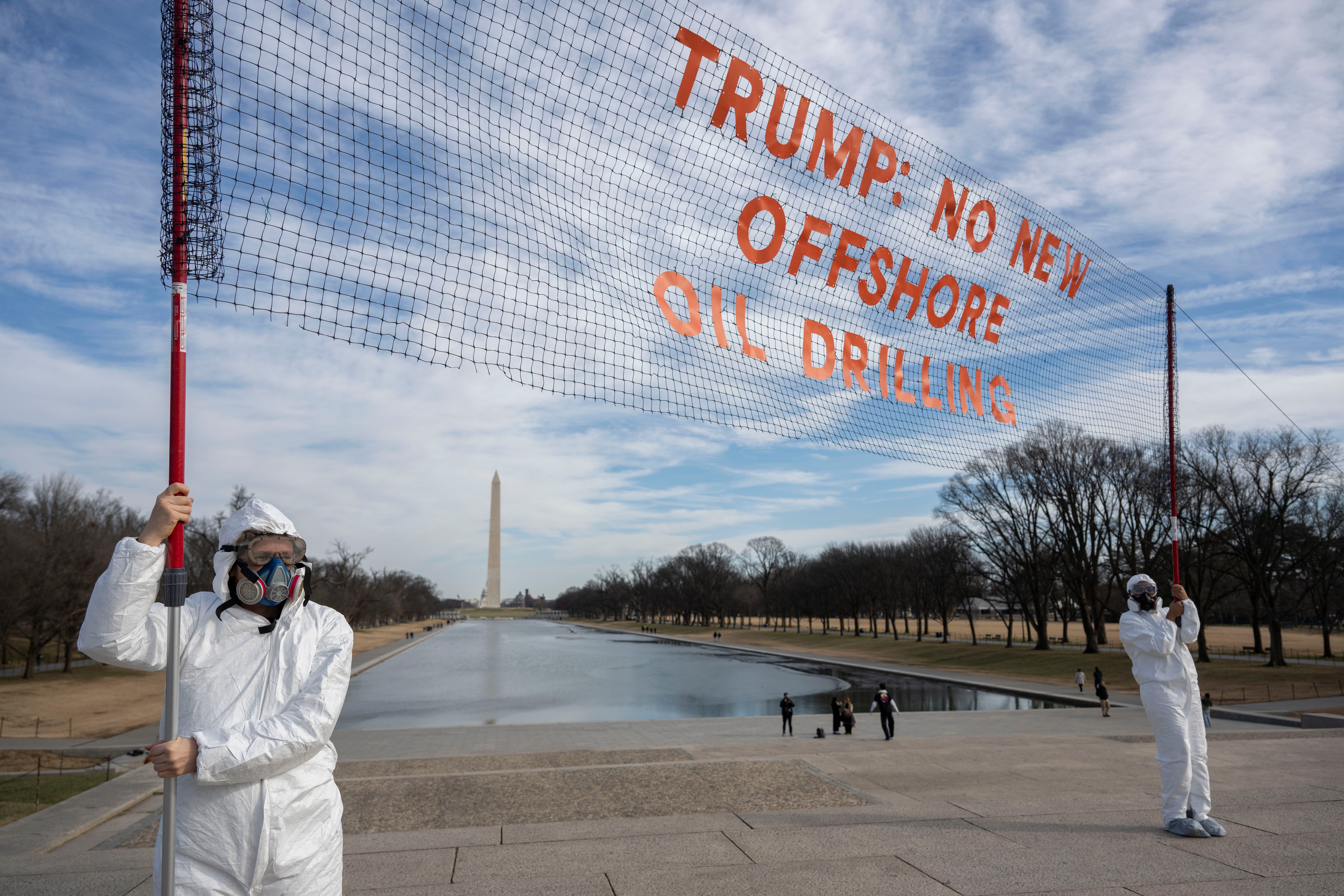
Today, the federal comment window closed on the Trump administration’s draft offshore drilling plan. A few of us marked it in D.C. with hazmat suits and a sign that read, plainly, “Trump: No New Offshore Oil Drilling.” Not that dramatic, but I think it’s fair to say that’s because the plan already is.
What the administration put on the table is the 2026–2031 National Outer Continental Shelf leasing program, a five-year blueprint for how the federal government could auction off drilling rights in U.S. waters. Interior says it’s considering a plan to open nearly 1.3 billion acres of U.S. ocean waters to new offshore oil and gas drilling.
That’s an area bigger than half the continental United States. It stretches from the Arctic, down past California, and across wide swaths of the Gulf.
And the other thing to know, right up front, is that opposition hasn’t come from the usual corners alone. Florida Republicans have been unusually direct about wanting the eastern Gulf kept off limits (probably not because they suddenly became climate champions, but because they don’t want rigs near beaches, and they don’t want military training areas disturbed). California leaders have been just as loud, for their own reasons, which are basically, ‘we’ve seen this movie before, and we remember how it ends’.
First, what the plan does (and what it doesn’t do)
The draft plan doesn’t approve a new rig tomorrow. What it does is set the schedule and the menu, including where lease sales could happen, how often, and across which regions, through 2031. If the plan is finalized later, those lease sales are how the industry gets its foot in the door.
The comment period that just ended is part of BOEM’s multi-step process. After this, Interior reviews comments and keeps moving through the process toward a proposed program and a final program. That can take a while, and while it’s happening, there’s room for it to be reshaped by politics, courts, and sheer public resistance.
Why the backlash is so broad (and honestly, pretty predictable)
This debate usually gets framed as jobs versus environment. But the opposition here isn’t coming from people who don’t care about jobs, it’s coming from people whose jobs depend on clean water.
After Deepwater Horizon, Northwest Florida lost an estimated $2 billion in tourism spending from cancelled trips, the commercial fishing industry lost $62 million in dockside sales in one year, and Louisiana’s visitor spending dropped $247 million and took three years to recover.
That’s what Florida Republicans are worried about. Eight GOP members of Congress sent Trump a letter the day the plan dropped, calling drilling in the eastern Gulf “incompatible with military operations and recreational uses.” Both Republican senators have publicly opposed it and even Governor Ron DeSantis said it would undo protections “we worked very hard to establish.”
And the thing is, even if you set aside the spill risk, the benefits don’t land locally. The administration is selling this as a way to lower gas prices and boost supply, but offshore drilling is slow and expensive, and it feeds into global oil markets. Interior’s own documents describe this as a long-term production pipeline. So if someone tells you new offshore leases are going to bring down prices at the pump anytime soon, they’re selling you something that may never arrive.
The “we already have plenty of oil” problem
The U.S. is already producing more oil than any country in history.
The plan isn’t coming from an industry that’s been desperate for new territory because it’s used up the old territory. The industry already sits on more than 11 million acres of leased federal waters and only about a quarter of that acreage is actually producing oil.
Instead of requiring them to develop what they have, or clean up the hundreds of abandoned platforms and thousands of miles of pipelines they’ve left behind, the plan hands them more.
And while the administration pushes to expand where drilling can happen, it’s also rolling back the safety measures put in place after Deepwater Horizon. Enforcement of safety violations at the Pipeline and Hazardous Materials Safety Administration has dropped nearly in half. This means they’re increasing the risk while removing the safeguards.
Alaska: the place where the “worst case” gets real fast
Interior is proposing 21 lease sales off Alaska, more than any other region, including waters where offshore drilling has never been established at scale, and if something goes wrong out there, there’s no fixing it. You can’t boom off oil in freezing water the way you can in the Gulf.
Not to mention, the industry isn’t even that interested. BOEM held a Cook Inlet lease sale in 2022. They got one bid. One. The Biden administration looked at that and removed Cook Inlet from its five-year plan, citing “limited expressed interest” and “higher environmental risks associated with new leasing in relatively undeveloped areas.“ Now Interior wants to hold five more sales there, plus sales across the Beaufort Sea, Chukchi Sea, and a bunch of other Arctic planning areas.
So what now?
Now that the comment period is closed, Interior reviews what came in and prepares the next version, the “Proposed Program,” which comes with a 90-day comment period. After that, there’s a Proposed Final Program that goes to the President and Congress for 60 days. If nothing changes, it becomes final. The whole process typically takes 2–3 years, though this administration is trying to accelerate it.
Here’s what to watch for:
When BOEM releases the Proposed Program. That’s when the map can change, and when public pressure can force areas to be removed. California and the Eastern Gulf are both contested enough that they could come off the table if there’s enough resistance.
When specific lease sales get scheduled. A sale on paper is different from a sale on the calendar. That’s when local officials, fishing groups, tourism boards, and military stakeholders show up, and agencies hate dealing with that kind of backlash.
When members of Congress move legislation to protect specific coasts. Florida’s senators already have a bill and California’s delegation is exploring legal options.
If you’re in a coastal state, call your members of Congress and tell them where you stand. If you’re in Florida or California, your opposition actually matters more than most — because your elected officials are already on record pushing back, and they need to know their constituents are behind them.
La planète n'est pas la propriété des humains. LA VIE n'a pas a demander la permisssion pour être.