

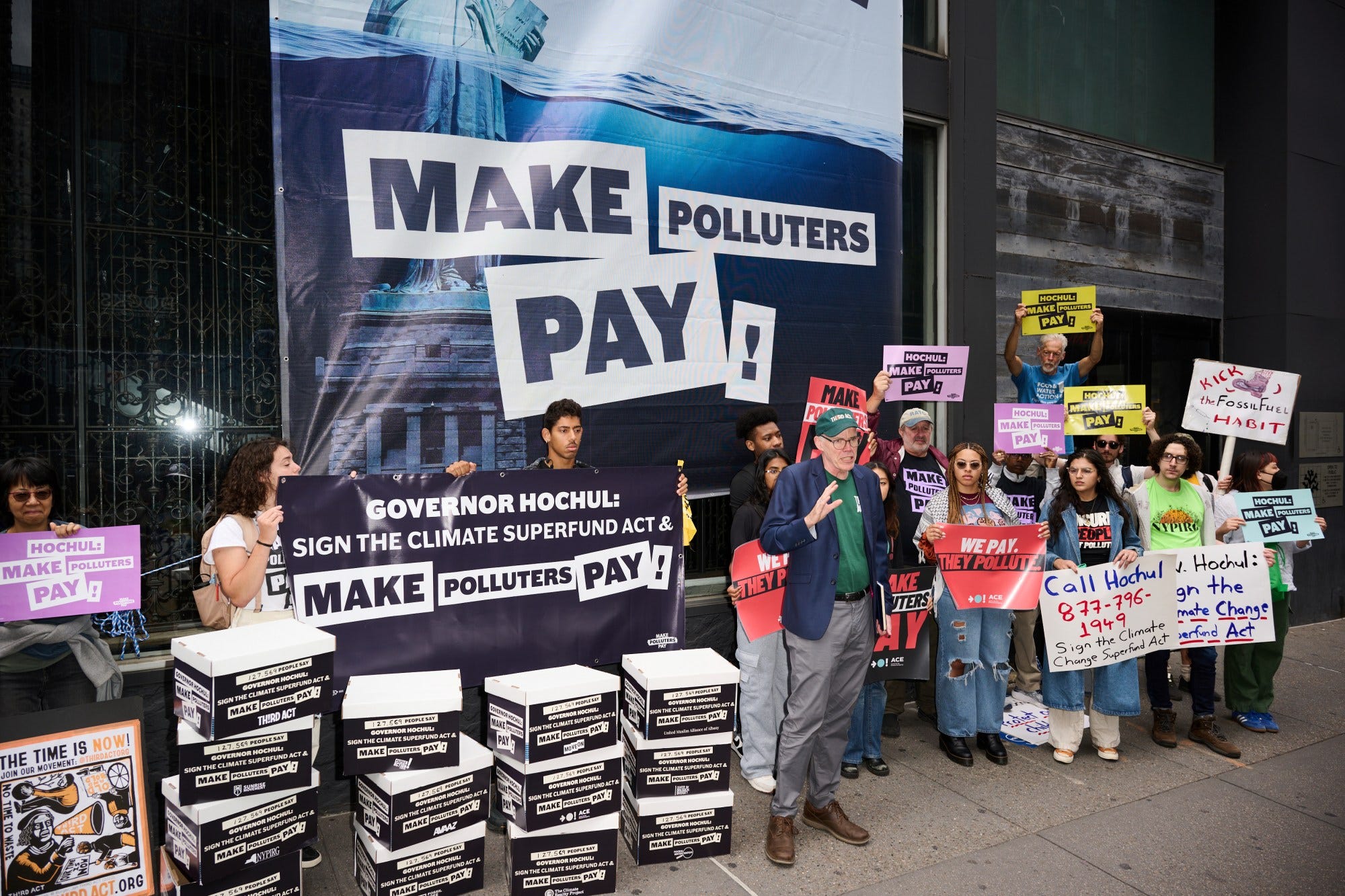
Last week, a federal judge in Syracuse struck down New York’s Climate Change Superfund Act, blocking for now the state’s landmark effort to recover $75 billion from some of the world’s richest fossil fuel companies to help pay for flooding, storms, extreme heat and the enormous infrastructure costs already piling up across New York. It is a serious setback and one Attorney General Tish James should appeal immediately – but it is not the sweeping national defeat the fossil fuel industry and its allies have spent the past few days trying to make it out to be.
The ruling turns largely on City of New York v. Chevron, a controversial 2021 Second Circuit decision that involved New York City suing fossil fuel companies under state tort law, rather than a state legislature establishing a cost-recovery program for climate damage. Judge Brenda Sannes concluded that the precedent nevertheless required her to strike down the Climate Superfund Act, even though other federal appeals courts have since sharply criticized the Second Circuit’s reasoning. The Fourth Circuit found the ruling contained a “legal flaw“ and said its approach “essentially evades the careful analysis that the Supreme Court requires,” while the D.C. Circuit has said the reasoning “cannot be squared” with Supreme Court precedent.
That leaves New York with a strong reason to appeal. It also leaves the rest of the country in a very different position than the industry’s victory laps suggest. City of New York binds federal courts only within the Second Circuit, and Judge Sannes’s ruling does not determine what a court in California, Maryland, Illinois, Oregon, Washington or anywhere else outside that circuit would do with a climate superfund law.
That matters because the political effect of this ruling could ultimately be more valuable to the fossil fuel industry than the ruling itself. Big Oil does not need to defeat climate superfund laws in state after state if an early win in New York is enough to scare legislators elsewhere into abandoning them. The industry and its allies are already trying to turn one district court decision into a national warning, even though the ruling has no nationwide force and most federal courts are not bound by the precedent Sannes applied. If lawmakers respond by shelving their bills, the industry gets much of the nationwide result it wants without having to win another case.
The immediate job in New York is to make sure this ruling is appealed and the state keeps fighting for the law it passed. Sign our petition calling on Attorney General Tish James to appeal and defend New York’s Climate Superfund Act.
There is also another climate superfund decision still coming from a federal court within the Second Circuit. Vermont’s law is being defended before federal Judge Mary Kay Lanthier, who is bound by City of New York but not by Sannes’s interpretation of how it applies to a Climate Superfund statute. Lanthier focused closely at oral argument on whether Vermont’s law should be considered an emissions regulation at all, and she remains free to distinguish a cost-recovery program from the tort claims at issue in City of New York.
One circuit doesn’t get to decide for the country
It bears repeating that federal courts are not bound by City of New York, much less by one district judge’s decision applying it, which means lawmakers elsewhere can continue introducing and passing climate superfund laws and those laws can be evaluated under the precedent that actually governs their states. Courts outside the Second Circuit have already rejected similar preemption arguments in climate accountability cases in Minnesota, Colorado, Hawaii, and Massachusetts.
In fact, there is a strong argument that passing these laws elsewhere has become more important after New York’s loss. If climate superfund laws continue to spread, the fossil fuel industry has to make its case before judges and appeals courts around the country rather than relying on one favorable precedent from one circuit. If states stop, City of New York gains a reach through political intimidation that it does not have as a matter of law.
And intimidation is a big part of what is happening here, to be very clear. The industry is spending enormous resources fighting these laws while its allies simultaneously try to convince lawmakers that resistance is futile. The easiest climate superfund law for Big Oil to defeat is the one that never gets passed because legislators were scared off by what happened somewhere else. We should not turn a district court victory in New York into a national victory the industry has not actually won.
The court can change who pays but it can’t make the costs go away
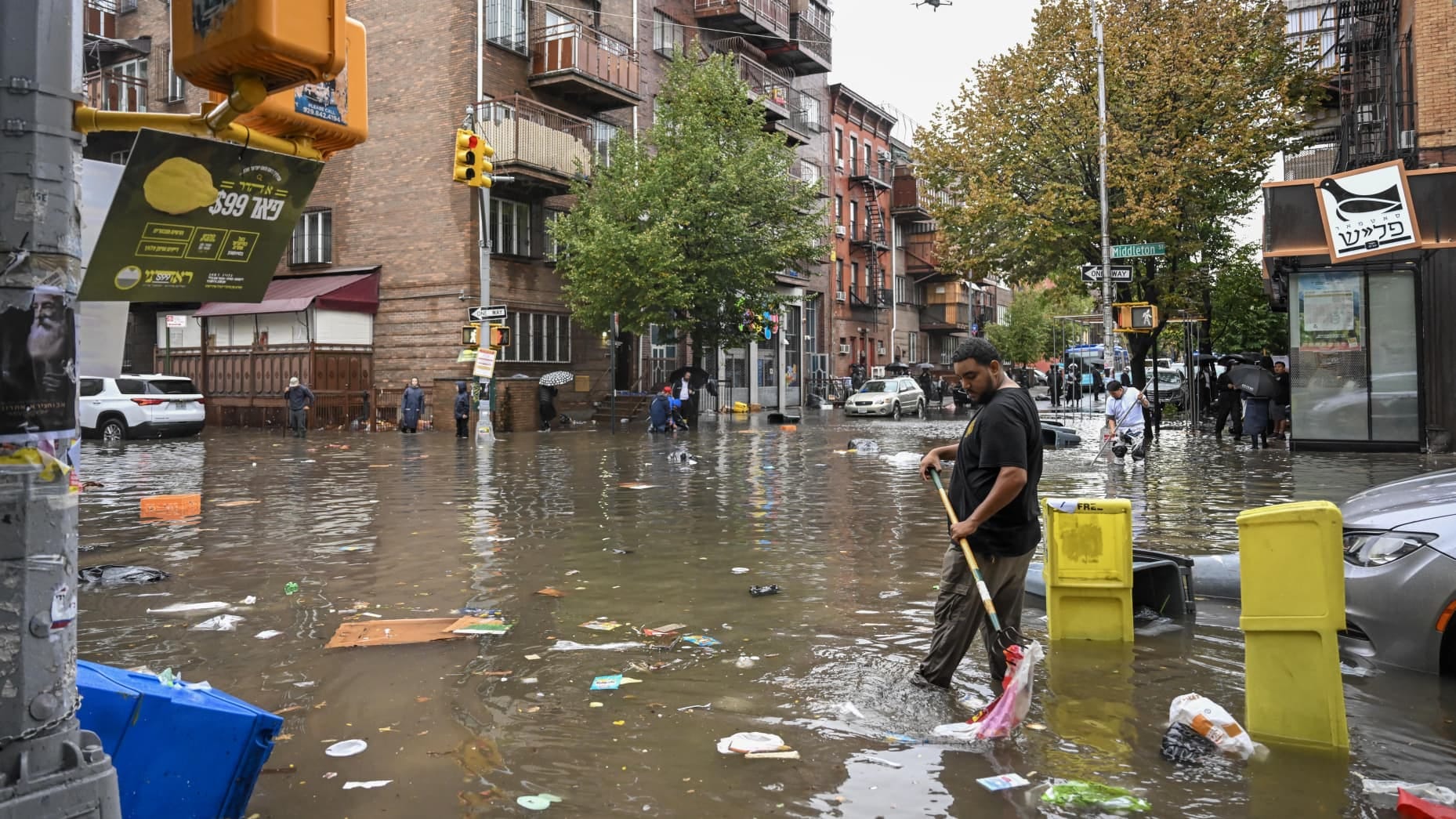
The reason fossil fuel companies are fighting so hard over these laws is because an extraordinary amount of money is at stake, and without corporate accountability, much of it lands on the public.
New York alone faces estimates of $52 billion to protect New York Harbor, $75 to $100 billion for Long Island and tens of billions more elsewhere in the state, while climate-related infrastructure spending could run into the hundreds of billions of dollars over the coming decades. In other words, $75 billion was already a conservative attempt to recover only a fraction of what climate change is expected to cost the state.
A judge can strike down the mechanism New York created to collect $75 billion from fossil fuel companies, but she cannot strike $75 billion worth of climate costs from the state’s books. The seawalls, drainage systems, flood protections and repairs still have to be paid for. The only question is who gets the bill.
That is why what happens next matters so much. The fossil fuel industry is betting that one favorable ruling will do more than block one law. It is betting that New York will give up, that lawmakers in other states will get nervous, and that a legal victory in one courtroom will become a political victory everywhere else. There is no reason to hand them that.
New York must appeal, Vermont must stand its ground, and every other state must press onward in the name of real accountability.
×
Error!
The email address you entered does not appear to be valid or may not exist. Please check the spelling and try again.