
Another Oil Flashpoint

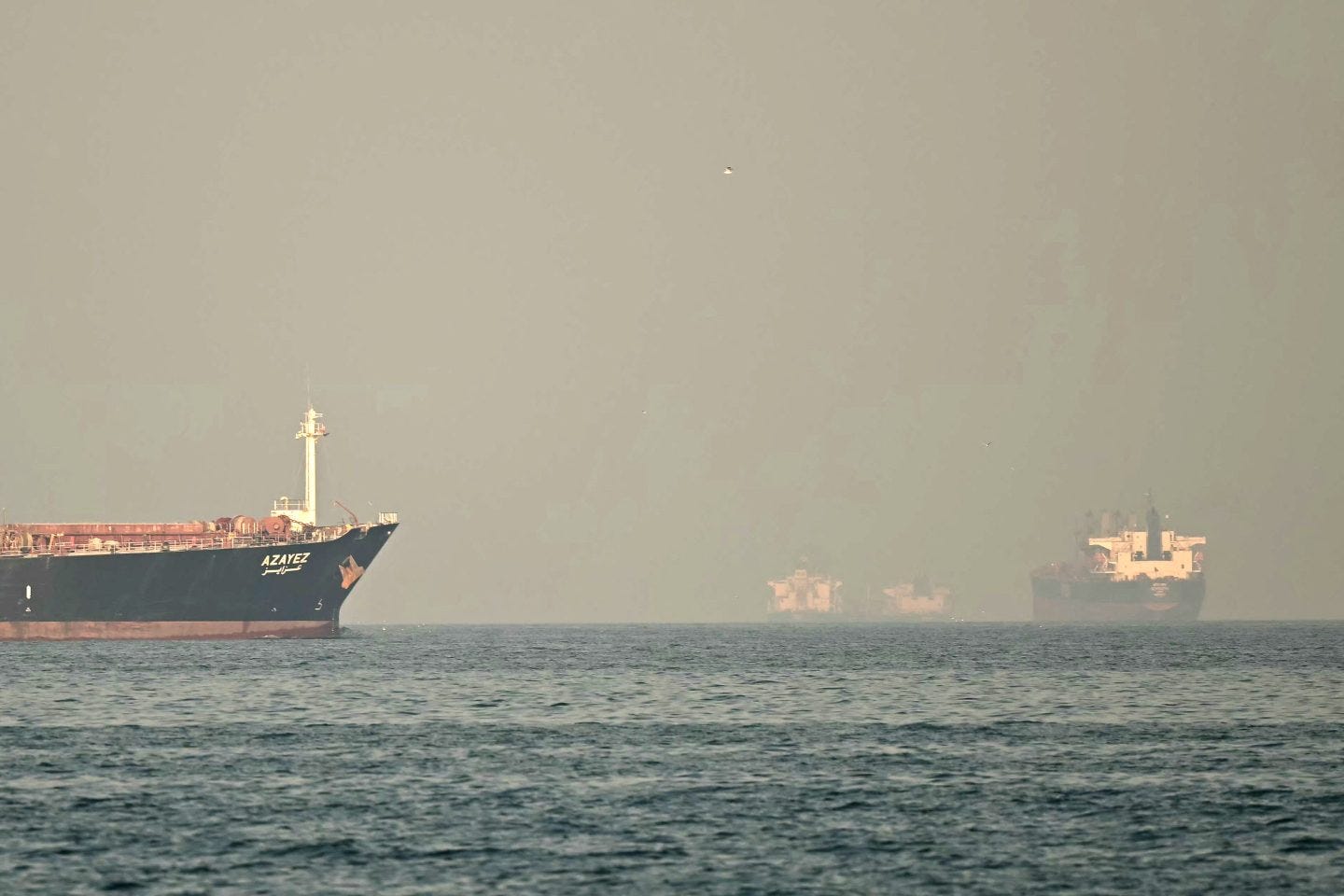
The United States has once again launched military strikes in the Middle East, and once again oil markets are reacting faster than anyone else.
Within hours of the strikes on Iran, crude prices ticked up and analysts began running the same calculations they always run when tensions rise in the Persian Gulf. What happens if the Strait of Hormuz closes? What happens if tankers stop moving? How high does oil go?
About 20% of the world’s oil supply moves through that strait, a stretch of water barely 20 miles wide at its tightest point. If it becomes impassable, experts are already warning prices could climb toward $100 a barrel. We’re already seeing insurance rates for tankers rise, shipping routes beginning to hesitate, and traders are starting to watch satellite images of vessels turning around.
This is what volatility looks like when the global economy depends on a chokepoint you could practically see across with binoculars.
And we call this stability?
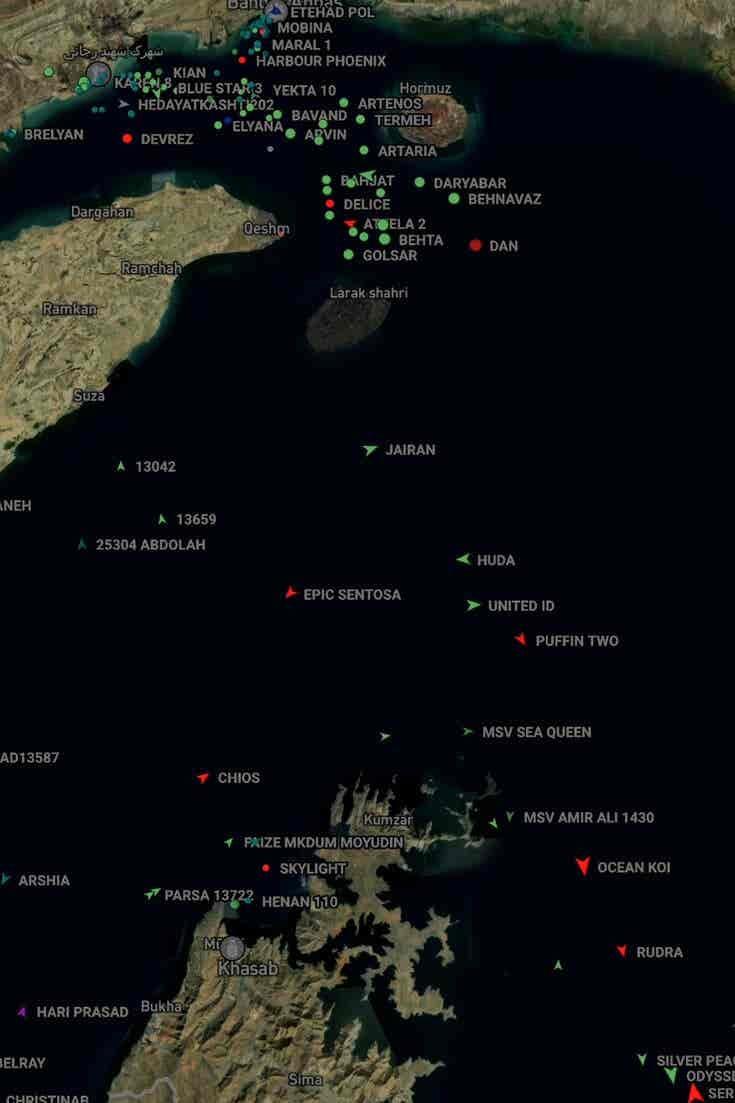
Take a look at this visualization from the New York Times that shows a significant decrease in ship movement through the Strait of Hormuz following the joint attack on Iran.
The industry isn’t shy about what it wants
Earlier this year, the head of the American Petroleum Institute said U.S. oil companies were prepared to be a “stabilizing force” in Iran if the regime falls. Industry analysts have described Iran’s oil sector as structurally sound despite years of sanctions, and far more attractive, in their telling, than Venezuela’s deteriorated infrastructure. One former national security and energy adviser under President George W. Bush put it even more bluntly, saying that companies could “get a lot more oil, a lot sooner than we will out of Venezuela.”
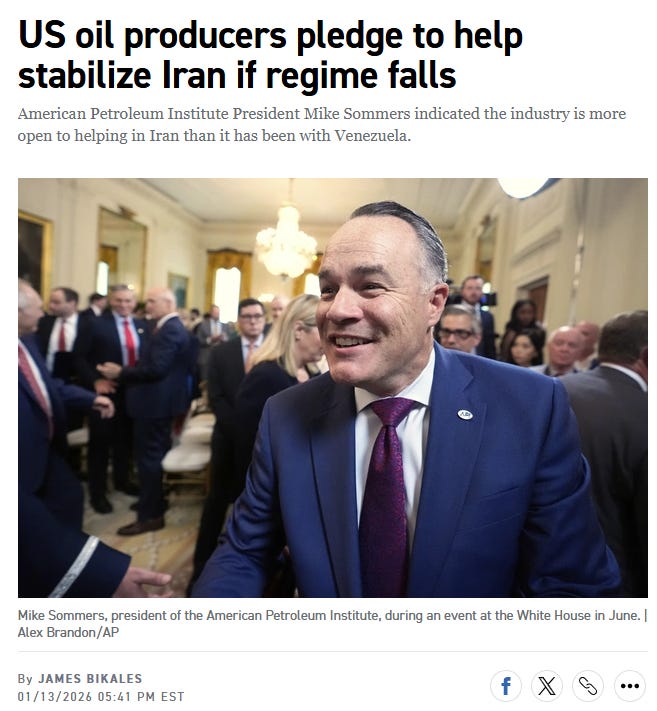
That’s not the same as saying executives are directing foreign policy. It is, however, a reminder that when political upheaval hits an oil-rich country, the industry quickly begins thinking about access, contracts, and production timelines – basically, how can they profit off of this instability as much as possible.
The overlap between major U.S. interventions and major oil reserves has been hard to ignore over the decades. Iran nationalizes its oil industry in the early 1950s; a CIA-backed coup follows. Iraq, home to some of the largest reserves in the world, is invaded in 2003. Venezuela and Iran both sit near the top of the global reserves list and both have found themselves in Washington’s crosshairs in recent years. There are always layers of explanation — security, alliances, nuclear concerns, regional stability — but oil has a way of appearing in the background of each chapter.
And when conflict pushes crude prices upward, it’s households and small businesses that feel the immediate shock at the pump and on their utility bills. That kind of price volatility is disruptive and destabilizing for ordinary people, but it is not always bad for oil companies’ balance sheets.
The Strait of Hormuz problem and the illusion of “energy security”
We have built a global economy that hinges on the uninterrupted flow of fossil fuels through a handful of vulnerable corridors. The Strait of Hormuz is one of them, the Suez Canal is another. A few pipelines across Eastern Europe and a few export terminals along the Gulf Coast, and that’s basically all of it.
A missile, a drone strike, a cyberattack and energy prices spike worldwide. Families thousands of miles away pay more because ships hesitate in a narrow stretch of water most of us will never see. Governments move fleets and deploy troops to protect infrastructure that exists only because our energy system is organized this way. Oil executives, meanwhile, often benefit from the very instability that makes life more expensive for everyone else.
We’re told fossil fuels guarantee “energy independence.” In reality, they bind us to fragile supply chains, petro-states, and permanent geopolitical tension. If your prosperity depends on a 20-mile-wide waterway in one of the most militarized regions on Earth, that’s not independence.
Power that doesn’t start wars
Oil has to be extracted from specific places, moved through narrow corridors, refined in concentrated hubs, and protected along the way. That physical reality shapes foreign policy whether we admit it or not.
Sunlight and wind work differently.
Solar panels on rooftops in Ohio don’t pass through the Strait of Hormuz, wind farms in Iowa don’t depend on tanker insurance markets in the Persian Gulf, and a battery connected to a local microgrid isn’t waiting on a naval escort. Clean energy infrastructure can be built in pieces, close to where people live and work, which makes it harder to disrupt and less likely to drag entire economies into geopolitical standoffs.
Right now, we’re living inside the consequences of an energy system that was designed around extraction and control. Every few years, a new crisis reminds us how exposed it is and how quickly that exposure shows up in gas prices, inflation, and foreign policy decisions. As long as oil remains central to the global economy, it will keep pulling politics, markets, and militaries toward it.
But we don’t have to organize our energy system this way forever.
We already know how to build energy closer to home. We already know how to generate power without sending tankers through narrow channels or moving fleets into position. Now, we must be willing to take action at the scale this moment demands, before the next flashpoint reminds us, again, how exposed we are.
Do we need to enrich fossil oligarch?